The journey that should transform how you identify, trace and engage every product — and why beverage leaders should act now
For decades, the linear barcode has been the backbone of product identification in the beverage industry. Scan it at checkout, look up the price, confirm the SKU. Simple, reliable, universal. But in a world where consumers demand transparency, regulators require traceability, and supply chains span dozens of markets and partners, that is no longer enough.
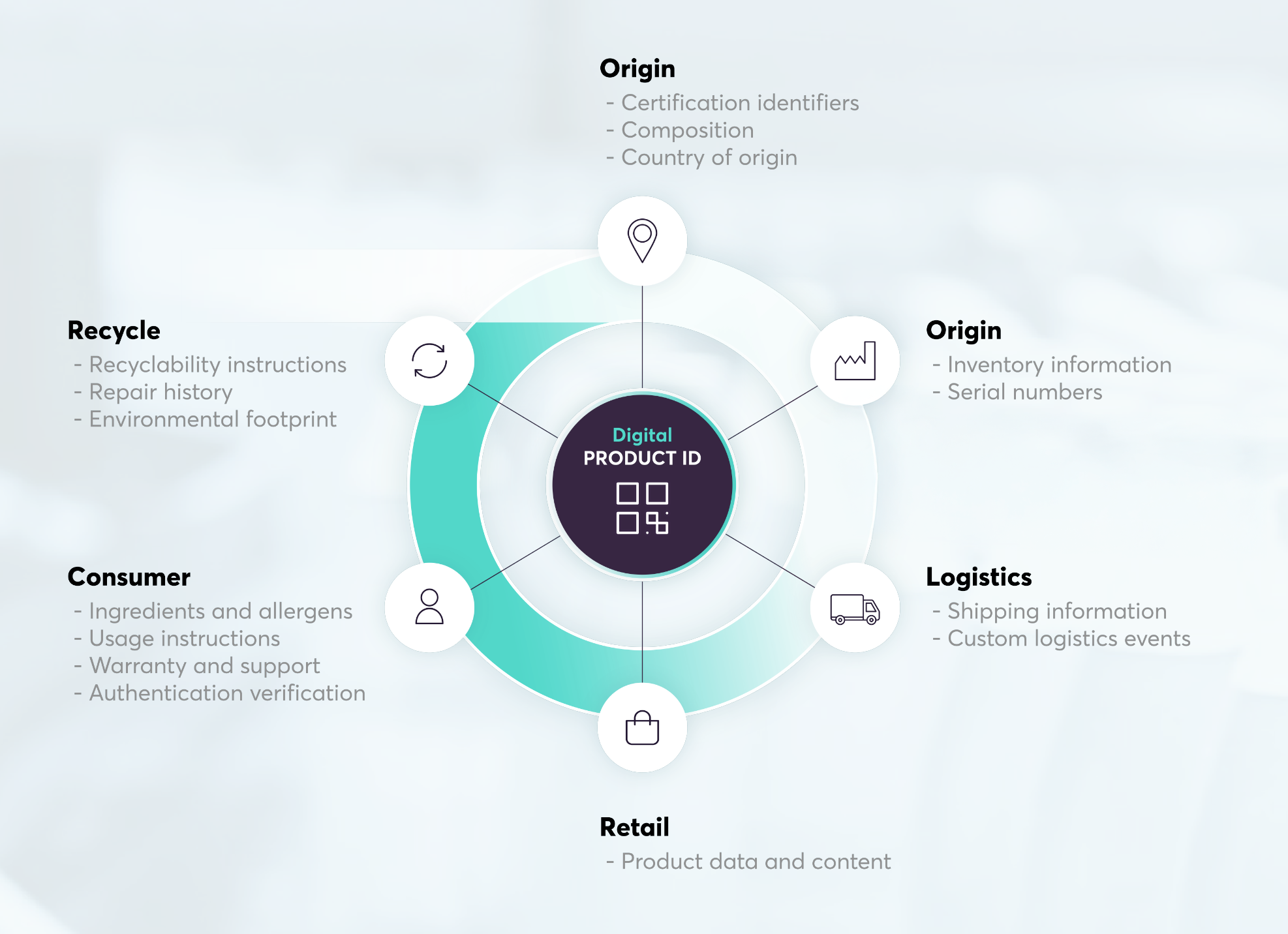
The beverage industry is now moving through a fundamental shift — from static product identification to dynamic, item-level Digital Product Identity. The vehicle for that shift is the GS1 2D barcode: a next-generation data carrier that can hold richer, dynamic data and connect every product in a way the linear barcode simply cannot.
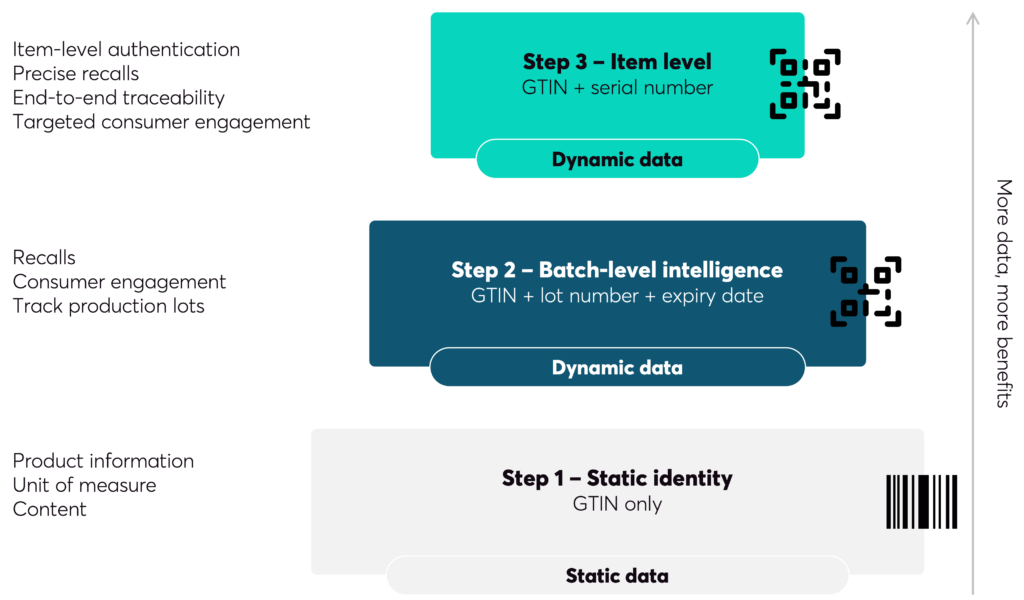
That journey follows 3 clear steps, and each step unlocks a new layer of intelligence.
Step 1 – Static Identity: GTIN only
The Global Trade Item Number, or GTIN, is the foundation of product identification. Encoded in the traditional linear barcode, it defines the product type: a 75cl bottle of a particular wine from a particular producer. Every unit of that SKU shares the same GTIN, from the first bottle off the line to the last.
At this level, the barcode is a lookup tool. It serves the checkout and the warehouse — and little else. Some basic product attributes such as bulk or variable weight can be captured alongside the GTIN, but the data is fixed. It cannot tell you anything about the specific unit in front of you: which batch it came from, when it expires, whether it is genuine, or where it has been.
This is where the vast majority of the beverage industry operates today. It is also where the limitations begin to show.
Step 2 – Batch-Level Intelligence: GTIN + Lot Number + Expiry Date
Adding lot number and expiry date transforms the code from a product label into a production record. The code no longer just identifies what a product is — it tells you where it came from within the production process, and how long it remains valid. This is dynamic data: information that varies from one batch to the next, carried by a GS1 2D barcode in a way the linear barcode simply cannot support.
The result is a meaningful step forward in operational efficiency and quality assurance across the entire supply chain.
- Faster recalls for affected batches. Under GTIN-only identification, a quality issue means pulling every unit of an affected SKU from every location – regardless of whether it was produced in the same batch. With lot-level data, a recall targets only the affected production run. What was once an expensive intervention becomes a precise response. The difference in cost, waste, and reputational damage is significant.
- Track entire production lots. Products can be traced not just by type but by production run, giving manufacturers, logistics partners, and regulators a shared, verifiable record of where a group of products came from, where they travelled, and where they ended up. This end-to-end lot visibility is the foundation of meaningful traceability, and the prerequisite for everything that comes next.
- Consumer engagement at batch level. A 2D barcode carrying lot and expiry data can also serve as a gateway to batch-specific content. Producers can link a particular lot to its harvest date, production notes, tasting profiles, or provenance story — giving consumers a richer connection to the product in their hands.
Step 3 – Item-Level Identity: GTIN + Serial Number
This is the step change.
When a unique serial number is added to every individual unit, each bottle or can receives its own digital identity – a passport that is entirely its own. Two bottles of the same wine, from the same batch, with the same expiry date, are now distinguishable. Each has a unique history. Each can be tracked, authenticated, and engaged with individually. This is dynamic data at its most granular: one code, one product, one identity.
Serialization is what makes item-level benefits possible. With a unique identifier per unit, you can unlock 4 categories of value that no previous step in the journey can deliver.
Inexto: Built for the Full Journey
Moving through the 3 steps of the GS1 2D barcode journey — across multiple SKUs, production lines, markets, and regulatory environments — requires precision at every stage. Codes must be generated accurately, printed reliably at production-line speeds, verified in real time, and tracked across the full supply chain lifecycle.
Inexto has been building this capability for some of the world’s most demanding industrial environments. As a GS1 Switzerland Partner Solution, we guide beverage brands through each step of the journey with confidence: from the first move to batch-level dynamic data, through to full item-level serialization and the consumer engagement possibilities it unlocks.
Our solutions ensure that every code is generated and printed accurately, every product is traceable throughout its lifecycle, and every scan delivers exactly the right experience to exactly the right audience.
The transition to GS1 2D barcodes is already underway. Retailers are aligning around global GS1 frameworks, and the window to move on your own terms is narrowing. Early movers will build their capabilities, align their supply chain partners, and shape their packaging cycles without pressure. Those who wait will find themselves reacting.
Contact us
Discover how Inexto can help your brand move through each step of the GS1 2D barcode journey.