

From batch visibility to product‑level precision across the supply chain
Meet Pasta Sauce Jar #4,217.
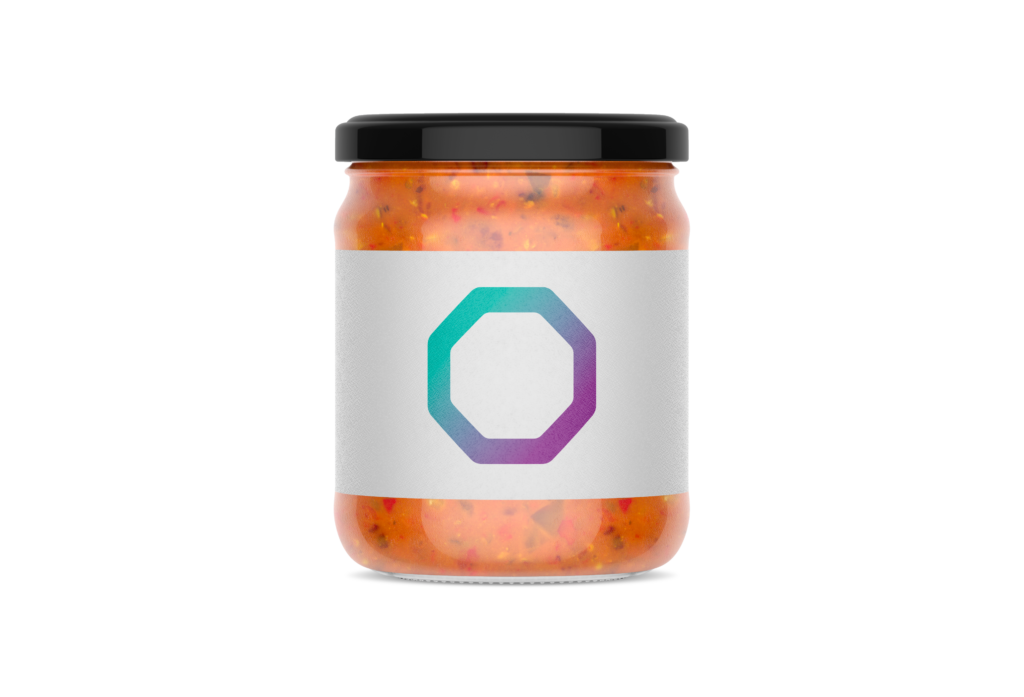
At this very moment, it’s moving along a packaging line in a food manufacturing facility in northern Italy – one of 400,000 of jars produced as part of a large production order. The line runs smoothly at 200 jars per minute, 24/7. By the end of the day, some pallets of finished goods will be wrapped and ready to move into warehouses and distribution networks across Europe to be delivered to retailers or wholesalers.
This is where the story of traceability begins. And depending on how far a manufacturer has invested in it, the outcome of that story can be very different.

The Batch-Level View
Batch identifier that groups jars produced under similar conditions.

The Item-Level View
Every jar is assigned a unique code at the point of production.
The Batch-Level View
As Jar #4,217 leaves the production line, it is assigned to Lot B-2291 — a batch identifier that groups all items produced during the working order.
This batch number is recorded in the manufacturer’s system alongside a rich set of information: the tomato supplier and initial batch number, the basil origin, glass jar supplier and batch number, the production date, the line operator, and quality control results.
When pallets of Lot B-2291 are loaded onto trucks and dispatched to distribution centers across Europe, those movements are logged. The manufacturer knows which lots went to which destinations. When a retailer receives a product, the lot number travels with it. That’s meaningful, documented, auditable information mostly supported by GS1 standards (EDI).
Three weeks later, a quality alert surfaces. An engineer reviewing equipment data identifies an intermittent sealing defect on the packaging line 4, during the lot working order linked with batch B-2291, that ran between Tuesday afternoon and Thursday morning. The issue affects only a subset of jars produced during that window — not the entire batch.
With batch-level traceability, the quality team can identify which lots were produced on Line 4 during that period. They can contact the relevant retailers and initiate recalls on those batches. The response is documented and faster than having no traceability at all.
But here is where the ceiling appears. Those batches contain tens of thousands of jars. The vast majority – produced before or after the defect window, or on a different line entirely – pose no risk whatsoever. Yet under batch-level traceability, they cannot be distinguished from the affected units.
Products are pulled from shelves across multiple retailers and perfectly good jars are destroyed. The cost is felt everywhere: wasted inventory, complex reverse logistics, strained retailer relationships, and erosion of brand confidence.
The Item-Level View
Now imagine the same production line, the same week, the same 400,000 jars – but this time, each one receives something the batch doesn’t have: its own digital product identity.
Every jar is assigned a unique code at the point of production, serialized and tied not just to its lot, but to its specific packaging line, its exact production timestamp, and the precise moment it passed through the sealing unit.
As each jar moves through the supply chain, its journey is recorded at unit level. Each scan, each transfer between logistics partners, and each check‑in at a distribution centre adds a new data point to its digital record. Enabled by GS1‑powered 2D barcodes – capable of carrying far more information than traditional barcodes and accessible through a single scan – this data becomes available to authorized stakeholders directly through the packaging.
So, when the quality alert surfaces, the response is entirely different.
The team pulls up the serialized production data and cross-references it with the equipment log from Line 4. The sealing defect occurred from 01:34 AM to 08:54 AM on Wednesday. Every jar sealed during that window is identified by its unique code. Every jar sealed outside that window is immediately cleared.
The result: 80,247 jars flagged. 319,753 cleared.
Those 80,247 affected jars can be tracked in real time across the supply chain. The manufacturer knows which units are still in warehouses, which are already with retailers, and where action is required. Retailers receive a precise list of serial codes to pull, or simply scan products in‑store using a dedicated app to confirm recall status.
The withdrawal is targeted, fast, and proportionate.
The 319.753 unaffected jars stay on shelves. Consumers are not alarmed unnecessarily, and retailer trust is preserved. Shoppers can scan the product’s Digital Link to verify whether their individual jar is safe — or part of the recall. And the total cost of the recall drops dramatically, up to 80% lower than with batch‑level traceability alone.
This is the message that item-level traceability makes possible: destroy what needs to be destroyed, and nothing more.
Conclusion
Batch‑level traceability gave the food industry its foundation. It enabled manufacturers to document, audit, and respond effectively at scale. That foundation remains essential, and it continues to underpin modern, compliant supply chains.
Item‑level traceability does not replace that foundation; it builds on it. By assigning each product its own digital identity, manufacturers gain a new level of precision and intelligence. Recalls become targeted instead of disruptive. Brand protection becomes proactive rather than reactive. Consumer transparency shifts from generic messaging to verified, product‑specific stories.
How Inexto can help
By combining traceability and packaging execution solutions, Inexto enables brands treating products as individual assets with their own data, history, and value. Whether the objective is global visibility, regulatory compliance, supply chain optimization, brand protection, or deeper consumer engagement, one principle remains constant: visibility at item level unlocks far more value than batch‑level systems alone ever could.
As supply chains grow more complex and expectations for transparency continue to rise, the real question is no longer whether traceability is required, but how much strategic value can it unlock beyond compliance.
Discover how Inexto helps brands assign a unique digital identity to every product – and turn traceability into a competitive advantage across the entire value chain.